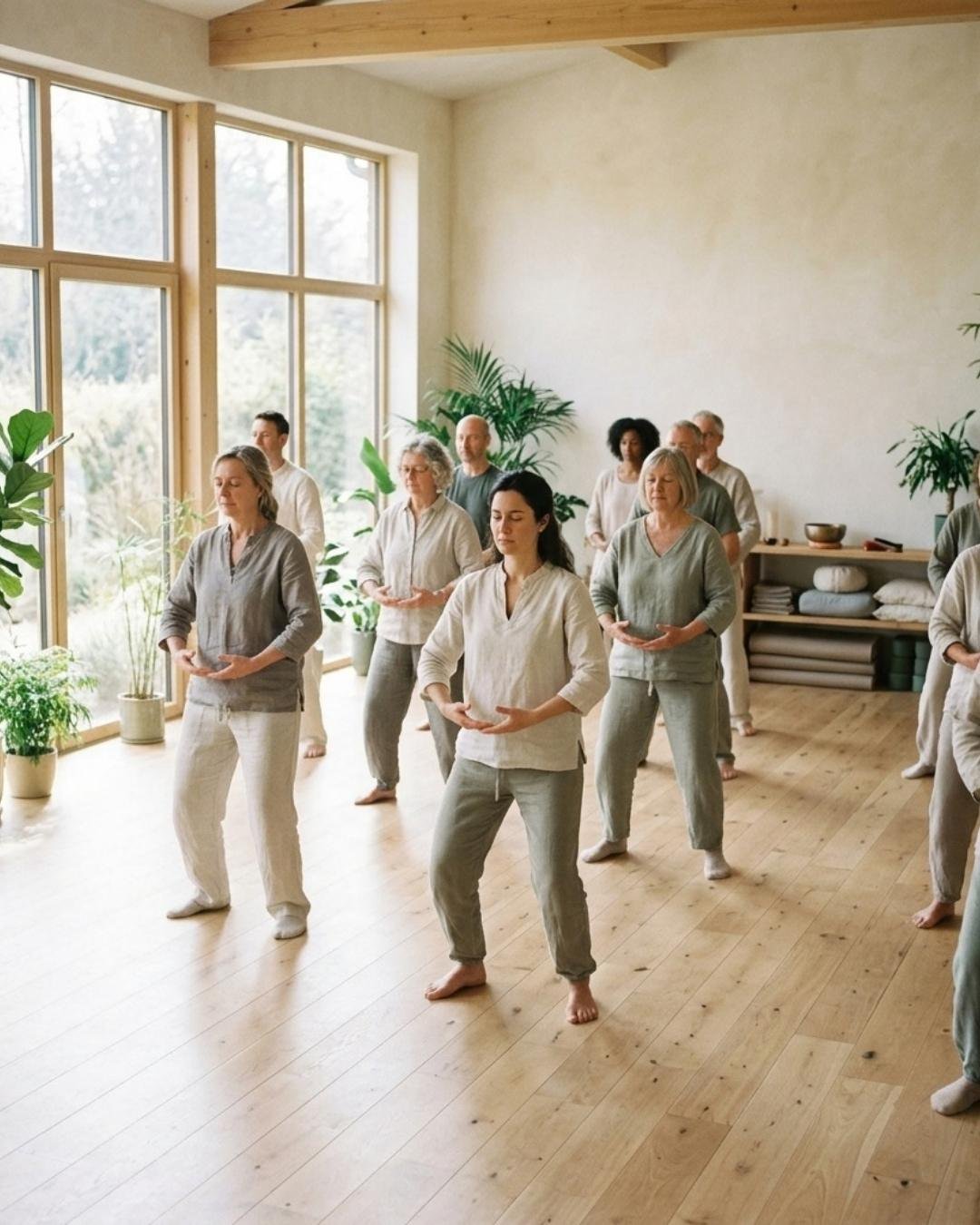
A schedule by teacher and by style

In a studio, students choose a style, a time — and often a teacher. Your schedule has to show all three.
Several teachers to pay, a space to fill all day, and class cards moving between every session.
Anna's Tuesday vinyasa is not Paul's Thursday yin. Students filter on what matters to them, and you see who fills a room.
Ten classes usable across every session and every teacher. The balance is deducted at booking and follows the student from class to class.
That figure decides whether a lunchtime class stays or moves, and what you pay each teacher.
A weekend or a week books in two stages: the deposit holds the place, the balance confirms it. Two payments, one invoice.
A schedule by teacher and by style
A class card valid everywhere
Occupancy by slot and by teacher

Workshops and retreats, with a deposit
The searches are specific: "yin yoga", "prenatal yoga", "yoga classes" plus the neighbourhood. Almost never the name of a studio you don't yet know.
So a page per style taught captures far more than a single page listing them. It also reassures: someone looking for yin does not want to land in a dynamic vinyasa.
Introduce your teachers with their training. In yoga, students choose a person as much as a time slot.
Status matters. An independent teacher who teaches at your place charges; he is not an employee. The confusion of the two exposes the studio to reclassification.
Sharing of filling. Many studios pay based on the number of students present. The figure must be indisputable: it is the reservation which gives it, not a counting by hand.
Retreats abroad. Selling a stay with transport and accommodation falls under travel regulations; going through a partner agency avoids a serious problem.
A visitor arrives on a yoga studio's site with three questions in mind: which styles, at what times, at what prices. Your content has to answer them in the first few seconds. A site that hides its prices behind a form loses the undecided. Give the information first, you can ask for the contact details later.
A good studio site comes down to a few well-written pages, not an endless brochure. Each page answers one precise need, and that is exactly what Google knows how to read. So your yoga web project starts with a clear site structure, before any choice of colours or fonts.
The design serves the reading, not the other way round. On a phone, the day's timetable and the booking button have to fit in the first screen: most of your visitors look at your classes on public transport, or in bed in the evening. Include real photographs of the room too, with the mats laid out and the actual light. Stock images get spotted, and they damage trust before the first class.
A student is trusting you with their back, their knees and their breath. So your site has to prove competence, not just an atmosphere. Write out each teacher's background, their training, what they like to teach, who their class suits — and who it suits less well. That professional precision does more for your credibility than any slogan.
A studio's visibility plays out on two surfaces: your website and your presence on Google. The first is built over time, the second produces bookings very quickly. The two have to say the same thing, word for word: same address, same opening hours, same phone number, same booking link.
A well-kept Google listing helps your clients find you before they have even seen your site. Choose the right category, publish photographs of the room and of the building entrance, keep the opening hours up to date and add a direct link to your timetable. A complete Google Business listing appears in the local map pack, which is where a lot of first classes are decided. And reply to reviews, even the lukewarm ones: that is where future students judge how well you listen.
Take a domain name in your studio's name, short and easy to spell out over the phone. The domain and hosting belong to you: if you change tools one day, your address and your search optimisation stay. Then look after the https certificate, the loading speed and the structured data describing your classes, so search engines understand your business without guessing. If you want to optimise further, read our guide to a search-optimised website for a personal trainer.
The pages by style catch precise searches, but they are not enough on their own to keep you alive in Google's eyes. Write a few useful articles: how to choose between yin and vinyasa, what to put in your bag for a first class, how to breathe when you are starting out. Those texts answer real questions and bring in visitors who were not looking for you yet.
Between "this studio looks good" and "I'm coming on Tuesday", there are three clicks too many on most sites. The aim is simple: that a stranger can book a class in under a minute, from their phone, at 11 pm, without writing to you. Booking built into the site, rather than sent off to a third-party platform, changes your conversion and saves you sharing your students.
Your timetable becomes bookable at any hour, with places limited per class and a waiting list that fills drop-outs automatically. Payment at booking by Stripe secures the place and does away with the cash left at the bottom of the bag. Our booking system handles those rules class by class, without your having to think about it every week.
Immediate confirmation, a reminder the day before, a thank-you message after the first class: those go out on their own and give you your evenings back. Use the same emails and campaigns to announce a new slot or the new September term to your whole list. You stop writing case by case, and your messages go out when they should.
Most studio sites do not suffer from a lack of style, but from a lack of upkeep. Here is what costs the most students, and what can be fixed in a day's work.
Putting a bookable timetable and one page per style in place settles almost all of these points. The rest is a matter of habit: ten minutes a month for the opening hours, the photographs and the teachers. To compare management tools before deciding, read our rundown of the best yoga studio management software.
We do not sell a theme to fill in. We build a bespoke site, designed and search-optimised for your business: your styles, your teachers, your packages. Booking and payment are in-house, not bolted on afterwards, and you run everything from bespoke software, with an iOS and Android mobile app carrying your brand for your students.
For 14 days you try it free, with no card details: you open real slots, you test a booking, you look at how it feels from the student's side. If you would rather keep your current site, a simple booking widget grafts the schedule and the payments onto it. The simplest thing is still to talk it over: talk to an expert or start your free 14-day trial.
Yes if you decide so: validity is set per plan, across all classes or only some.
Yes, by slot and by teacher, over whatever period you choose.
As two services: the deposit books the place, the balance is paid before the date.
Yes — each sees their own classes and sign-ups, without access to the rest of the studio.
The timescale depends mostly on you: on the texts, the photographs and the timetable you provide. The mock-up is approved together before anything goes live, which avoids endless back-and-forth. We often open the site with the essential pages, then add the pages by style over the following weeks.
Yes. The classes, the slots, the prices, the teachers and the photographs can all be changed from your own space, without touching any code. A change of time shows immediately on the site and in the mobile app. You stay independent, including in the middle of the season.
No, we take care of that with you. If you already own a domain, we attach it without losing your existing search optimisation. And if you change your mind later, the address stays yours.
That happens often, and the site handles it: Pilates becomes one more style, with its own slots, its own teachers and its own packages. You can even decide whether the class card gives access to it. Our page on Pilates studio websites goes into this case in detail.