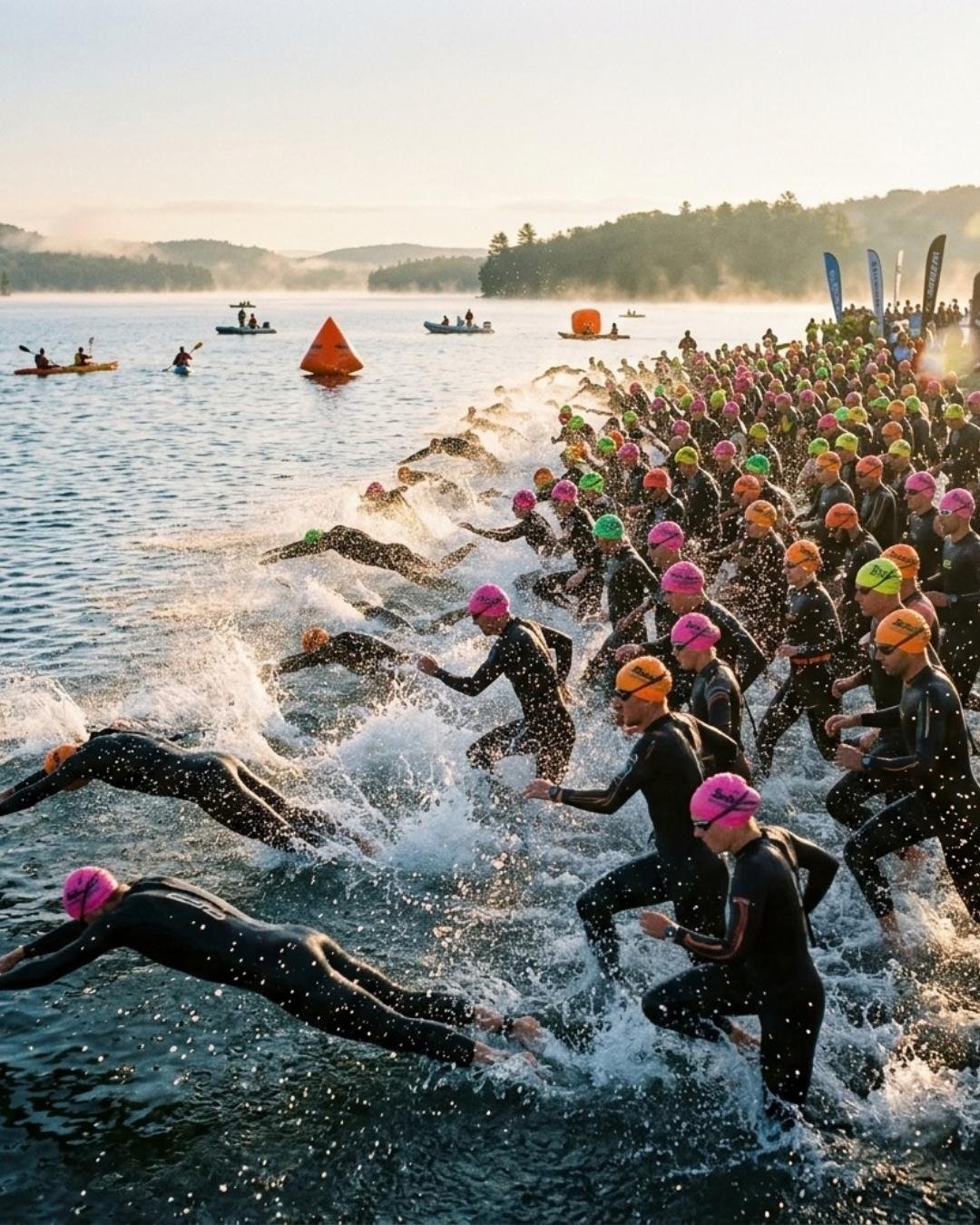
Three disciplines, three venues, one calendar
Pool on Tuesday, bike on Saturday, run on Thursday — three addresses, three coaches, one club. The coordination is what costs, not the training.
Pool slots you do not get to choose, bike rides at the mercy of the weather, ability groups, and a highly seasonal race calendar.
Every session carries its sport, its address and its coach. Members see their whole week without checking three different sources.
A strong swimmer can be a beginner on the bike. Groups are put together discipline by discipline, not overall.
Sprint, Olympic, half: group entries, car sharing, accommodation. One page per race saves the endless message thread.
The licence covers all three disciplines and governs competition. Expiries surface before the first events.
Three disciplines, three venues, one calendar

Ability groups discipline by discipline
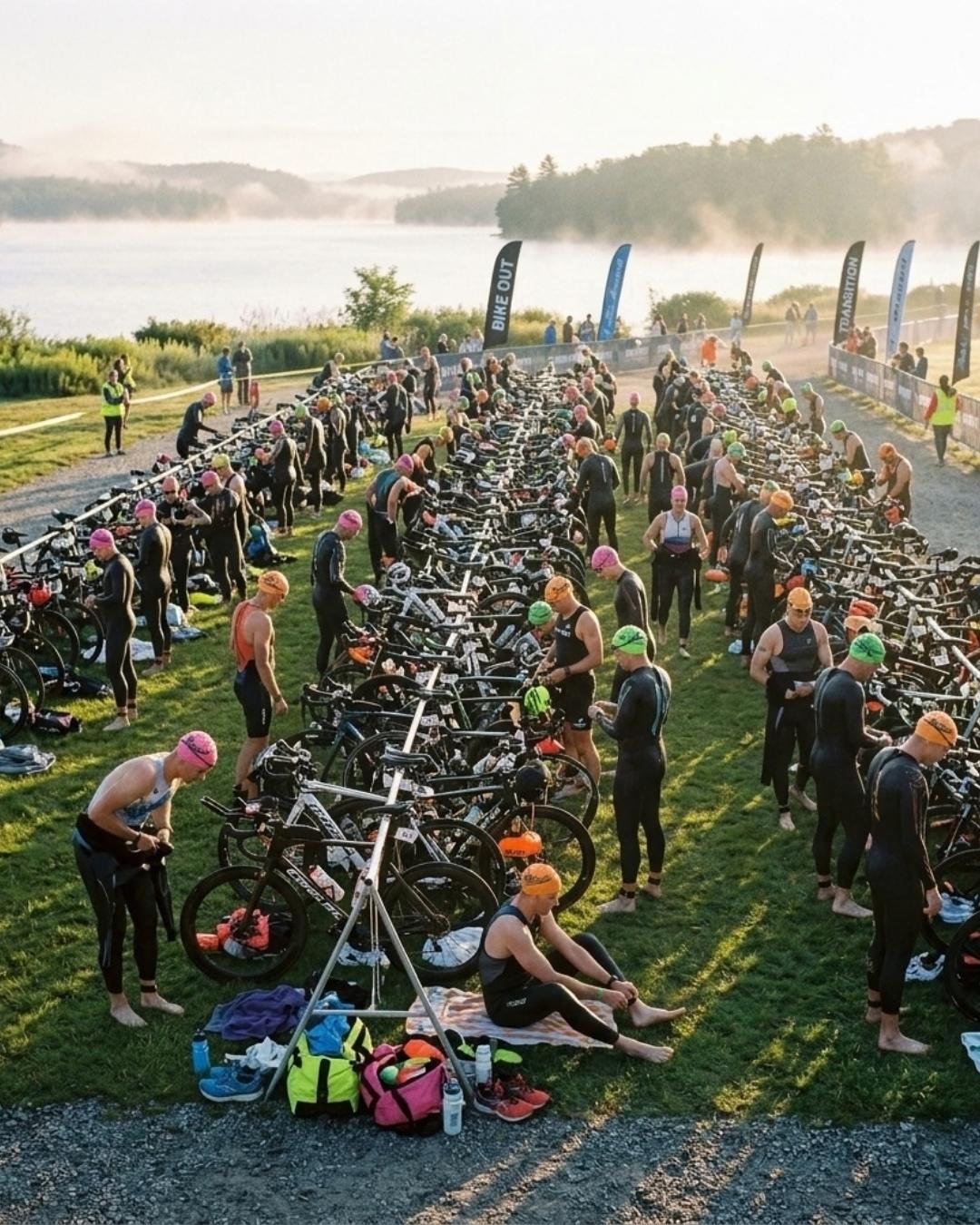
The season's races

Licences and certificates
The searches are specific: "triathlon club" plus the town, "triathlon for beginners", "training for a triathlon".
This audience wants to know which sessions are coached, at what times and at what level. A clear timetable is worth more than an about page.
Say whether the club takes beginners and whether open-water swimming is required: two questions everyone asks.
Basin slots are negotiated with the community and are rarely ideal. The whole rest of the week is built around them.
Bike outings depend on the weather and road safety: a cancellation must be made quickly to the group concerned.
The integrity check applies as soon as there are young people supervised.
The club's own introduction comes first. A visitor wants to know who you are, how long the club has been going and how many groups are training. Be specific about your status as a sports club, your affiliation and the name of your regional league. That information reassures people before their first taster session.
Each of these blocks answers a question you get asked ten times a season. Neighbouring clubs reach the same conclusion, whether it is an athletics club website or a running and trail club. The useful pages are the ones that save you time.
Coaching for payment requires a qualification or a professional licence. A background check applies as soon as a coach works with under-18s. The medical certificate and the insurance are part of the membership file. Say so plainly: it saves you going back and forth all season.
Searches are local and very concrete. People type a town name followed by "triathlon club", sometimes "beginner triathlon" or "open water swimming". Behind those searches are people who want an answer in under a minute. If the page does not say where and when you swim, they move on to the next club.
Google cross-checks your site and your business listing. Name your training venues: the pool, the leisure park, the meeting point for the bike rides. A club does not always have premises of its own: list every address. A page that explains triathlon and the disciplines it is made of works harder than a catch-all home page.
Among French endurance athletes, triathlon and duathlon often share the same registered members. The different formats of triathlon — sprint, Olympic, half — do not attract the same profile. Say clearly whether you can take beginners, and from what standard of swimming.
Parents look for the starting age, the supervision and the kit they will need. Add the timetable and a few equipment tips on a dedicated page. You fill the junior groups faster and you filter enquiries before they reach you.
A visitor who is convinced should be able to sign up straight away. Every session, every camp, every race deserves a button that says so. Plenty of triathletes book in the evening, after training: a booking system open around the clock catches those enquiries. Your pool sessions fill up without a single exchange of messages.
Limited places and a waiting list prevent overbooking and the friction that goes with it at the poolside. Automatic reminders cut no-shows on a popular technique session. Nobody has to count heads the night before any more.
A camp, a ride, a group race entry: online payment through Stripe takes the money as soon as the booking is made. Committee members stop chasing people by private message. The record becomes easy to read, and you get time back to organise the season.
Most club sites trip up on simple details. The people who run the club — committee, coaches, volunteers — have neither the time nor the inclination to fight with a complicated tool.
Every one of those points costs you memberships. The useful instinct is to bring the timetable, the sign-ups and the payments together in one place. You also want to be able to post the cancellation of a bike ride in two minutes, from your phone.
We build a bespoke website, designed and search-optimised for your sport. It has to give an immediate answer: where, when, how to sign up. In the same tool you get the connected schedule, the bookings and the payments. One single place to keep up to date.
The features suit a club juggling three disciplines: an online schedule with sessions bookable around the clock, limited places, a waiting list, automatic reminders and payment at booking through Stripe. Confirmations, follow-ups and pre-race campaigns go out without anyone lifting a finger. If you need them, we also deliver bespoke management software and an iOS and Android mobile app in your own branding.
Getting started takes one conversation. You describe your project, your goals for the new season and your sessions; we build the site around them. You can set the whole thing up during a free 14-day trial, with no card details. Do get in touch with the team to scope it out: talk to an expert or start your free 14-day trial.
Yes — every session carries its address and its coach.
Yes — level is set sport by sport, not overall.
As a limited-capacity service, with car sharing and accommodation if needed.
Yes — the triathlon licence covers everything the club does.
It depends on how many groups and venues you have to describe. Most of the work is gathering your sessions, your coaches and your membership documents. You can try the tool for 14 days before committing.
Yes. Members sign up from the site, pay through Stripe and get their confirmation by email. Licence and medical certificate renewal dates are chased automatically before the first races.
Yes, junior groups are managed like any other, with their own timetable and their own coaches. You ask for the documents specific to under-18s at sign-up. The background checks on your coaches remain your own responsibility.
Describe your venues, your times and your standards precisely: that is what people type. Publish one page per discipline and one entry per race your members are going to take part in. Update the site every new season. No ranking can be guaranteed, but a clear, living page works for you.