
Lessons for four as the default format

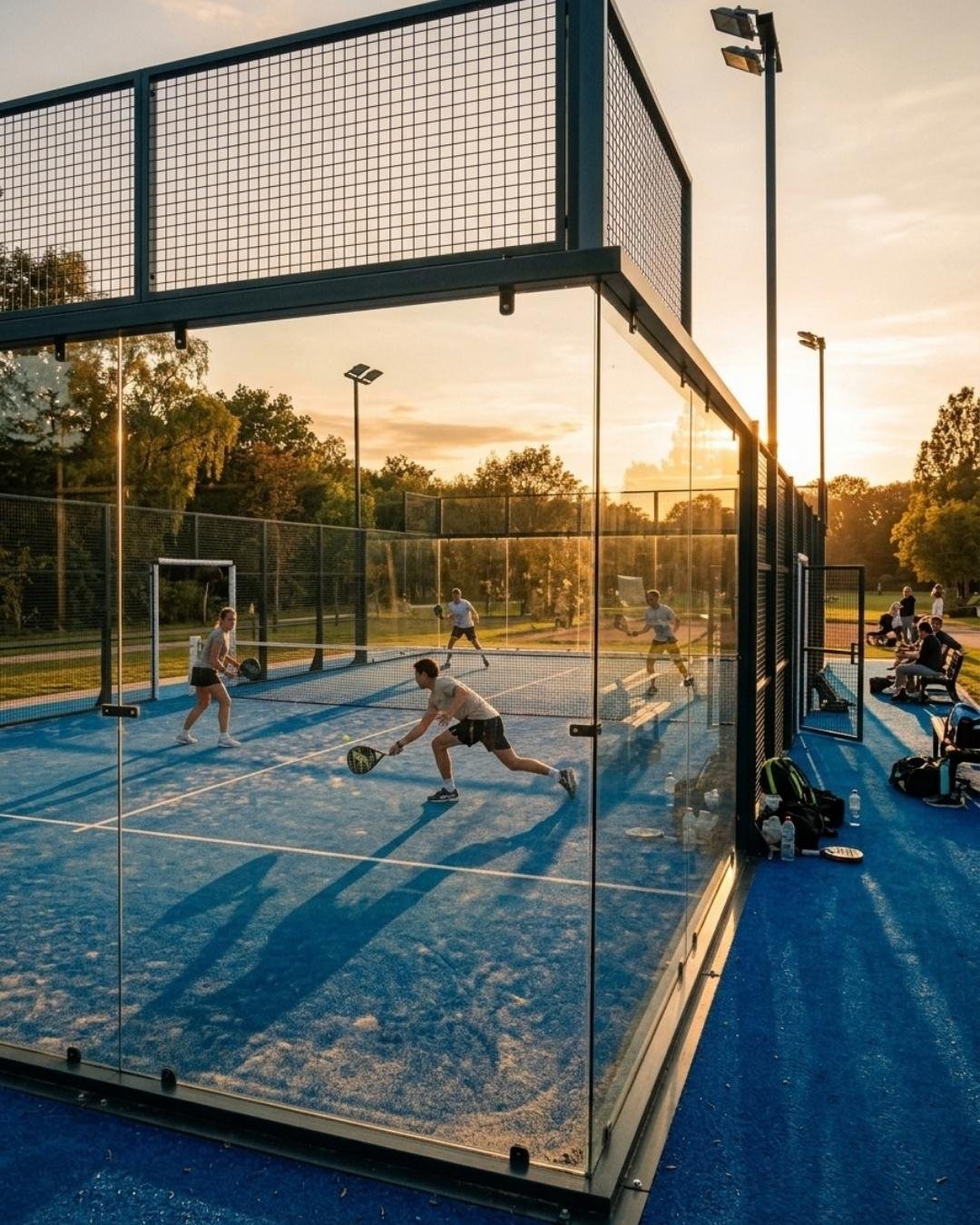
Padel is played in fours, and the court has to be booked. Your page should sell slots for four, not individual lessons.
You are not just selling your hour: you are selling your hour AND a court, whose availability is not up to you.
Padel is played in fours: the group is the norm, not the exception. Four places, a price per person, and the lesson confirms as soon as it is full.
A lesson with three either cancels or runs at a loss. The slot's waiting list tells interested players that one is missing — that is what saves the session.
Mixing a complete beginner with a ranked player wastes the hour for both. The level is selected before booking, not on arriving at the court.
Most beginners have no racket. Saying whether you lend them — and how many you have — removes the last obstacle to booking.
Lessons for four as the default format

A waiting list that completes groups
Level chosen at booking
Equipment stated, and counted
Padel is growing fast and is short of coaches. The searches are simple and uncompetitive: "padel lessons" plus the town, "padel taster", "padel coach for beginners".
It is a window: a well-built page still ranks easily, which is no longer true in tennis. Publishing early beats publishing perfectly.
Say whether you provide rackets. Most beginners have none, and it is what stops them booking.
With four, everyone pays less. A lesson for four at €25 per person brings in more than an individual lesson at €60, and fills the space you have reserved.
Level must be announced. Mixing a complete beginner and a ranked player ruins the time for both. The level is chosen when booking.
Train the fourth. A waiting list per slot makes it possible to complete a group of three, which saves courses that would be canceled.
A padel coach's website is judged in a few seconds. The player who lands on it wants three things: to know where you teach, at what level, and when they can book. Your home page is therefore not a word of welcome, it is a shop window: your slots, your courts, your lesson formats. The rest of the site adds to that first screen, it never replaces it.
Each of these pages answers a question people genuinely type into a search engine. That is what separates a brochure site from a site that brings you bookings. Your experience as a player and as a teacher gets a page of its own too: it reassures parents and members. If you teach other racket sports, the same structure carries over to a Tennis website or a Squash website.
The searches are short and very concrete: "padel lessons" followed by the name of a town, "padel coach for beginners", "where to play padel", "padel camp in the holidays". The player is looking close to home, often from their phone, sometimes the day before for the next day. So your site has to name the partner clubs where you work and the days you are on the courts. In France, plenty of clubs are short of coaches: the ground is there for the taking for anyone who publishes this information clearly.
Look after what the visitor reads before clicking, too: the page title, the description, the reviews. A business listing linked to the site strengthens the whole thing, because the two overlap. To dig into local visibility, our guide to search optimisation for a personal trainer sets out the method.
Padel is easy to pick up: you can hold a rally after an hour on court, and that is often where the passion starts. But a complete beginner and a ranked player have no business on the same court. Describe your groups in a player's language: the basics and the serve, the volley, playing the ball off the glass, tactics as a pair. Everyone places themselves, with concrete goals, and your lessons stay consistent in level.
A camp fills what the weekly lessons leave empty: school holidays, long weekends, bank holidays. Sell it as a block of sessions, with a number of places and a price per person, not as an isolated hour. A two- or three-day padel camp is more convincing, because it promises fast progress. And an intensive block creates regulars for the rest of the year.
Competition is the other engine. Plenty of players want to prepare for a tournament, move up through the team leagues, or simply get through the group stages without falling apart before the finals. Publish a calendar: your camps, the tournaments you help organise, the dates when you are with a team. A calendar kept up to date gives people a reason to come back to the site, and then to book.
Indoor courts are often empty during the week, at office hours. Companies are looking for a short activity where nobody is left standing at the side of the court. A page dedicated to team building opens up that market: a beginner session, rackets provided, a mini-tournament to finish. You fill ideal slots that nobody is competing with you for.
The right journey fits into three screens: I see the slot, I choose my level, I pay. Everything added on top loses you players along the way.
A padel booking system linked to your connected schedule does away with double bookings and with the exchange of messages to pin down an hour. The visitor books on their own and you approve nothing at all: the slot closes when it is full.
We build a bespoke website, designed and search-optimised for your business: your formats, your levels, your clubs, your camp calendar. There is no reason for you to be living your sign-ups in a notebook, between two lessons, by chasing people. With us, the site and the software are one and the same.
You keep the game and the teaching, we take the admin: slots filled, sign-ups paid for, no chasing to write. The trial runs for 14 days, with no bank card, and your own slots are online from day one — use it to test a full camp, or a free beginner session. Join us: you can talk to an expert or start your free 14-day trial.
Yes — it is a capped service: four places, a price per person, and the lesson confirms when it is full.
The slot's waiting list notifies interested players as soon as one is missing.
You only open slots where you have the court; the student's booking is for that slot.
Yes, a professional card is required to teach for payment, padel included.
Yes. The camp is created as a block of sessions, with its dates, its places and its price per person. The player pays once, receives their confirmation, then a reminder before each session. You know in advance how many rackets to bring.
Say what you provide and what the player has to bring: loan rackets, balls, shoes suited to artificial turf. Spell out changing rooms and showers if the club has them. A beginner who knows what to pack books far more quickly.
Yes. A fixed slot is sold as a package of several sessions, paid online at sign-up. Your experienced players keep their place in the group, and at the start of the term you know what has already been paid for.
Open the event as a slot with limited places, by level or by pair. Sign-ups close by themselves when the draw is full, and the waiting list takes over if someone drops out. On the day, you turn up with the list and the payments already made.