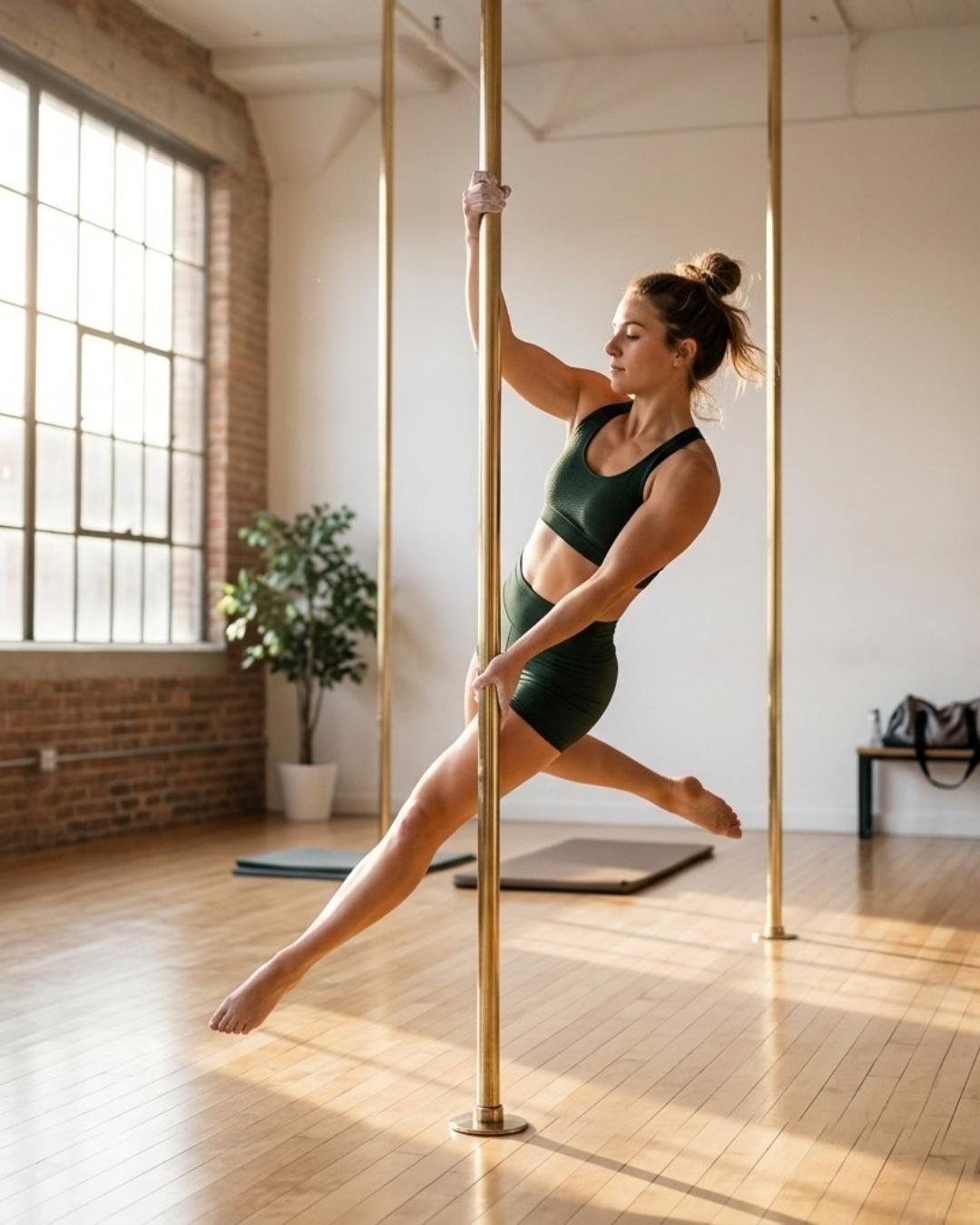
One place per pole
Eight poles, eight students. Your class size is not a teaching preference, it is the equipment — and it changes everything about how you sell.
A fixed amount of equipment, strict levels for safety reasons, a largely female clientele, and themed classes that bring people back.
Six or eight, depending on the studio. The class closes on its own and the waiting list takes over — the equipment decides, not enthusiasm.
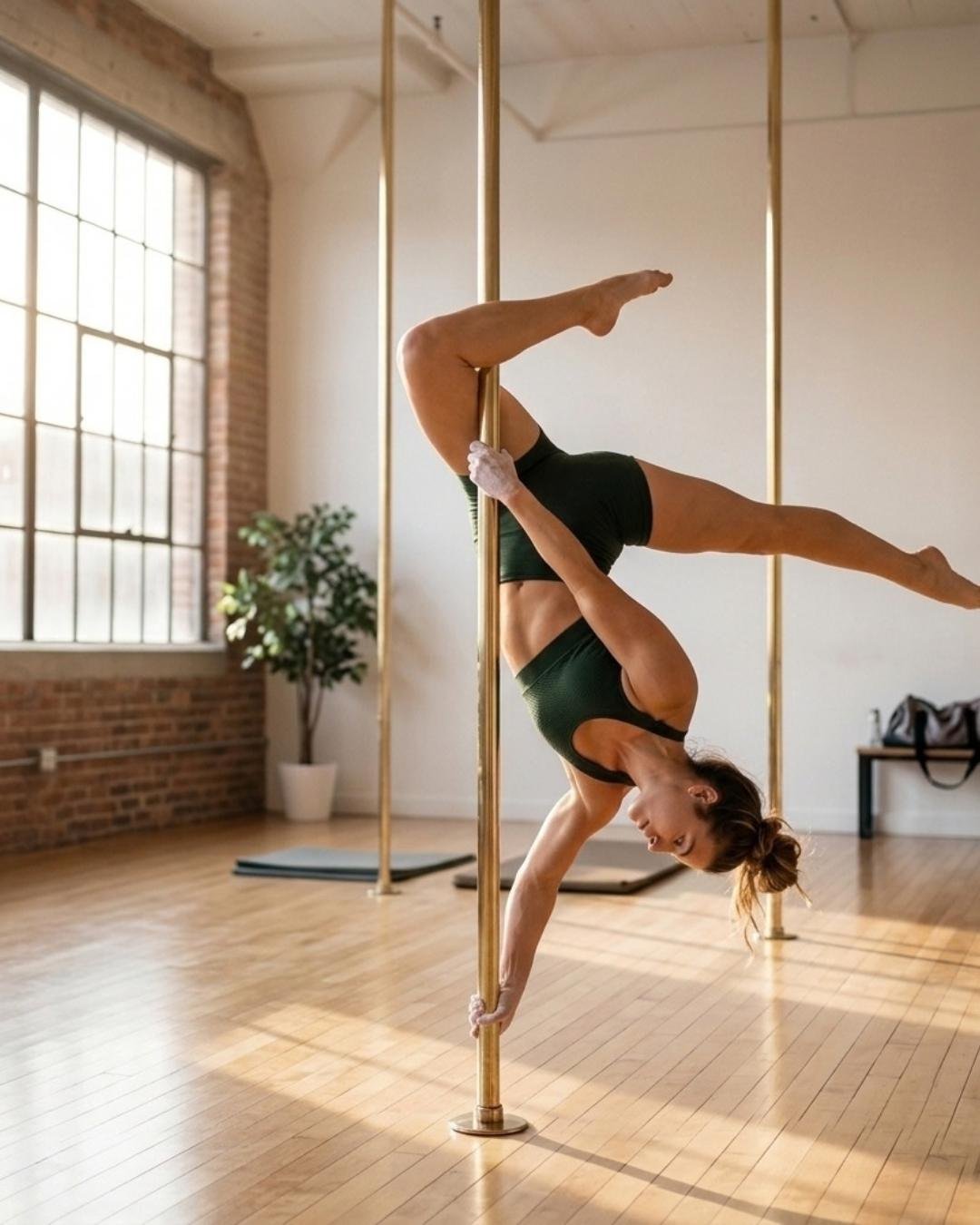
A beginner in an advanced class gets hurt. Students state their level when they book, and the prerequisites appear before they pay.
The ten-class pass is still the bestseller. Students can see their balance, and it goes down with each booking.
Exotic, flow, choreography, flexibility: these are what bring back a student who has plateaued. They fill up within days, as long as they can be booked.
One place per pole
Levels that cannot be skipped
Class passes and memberships
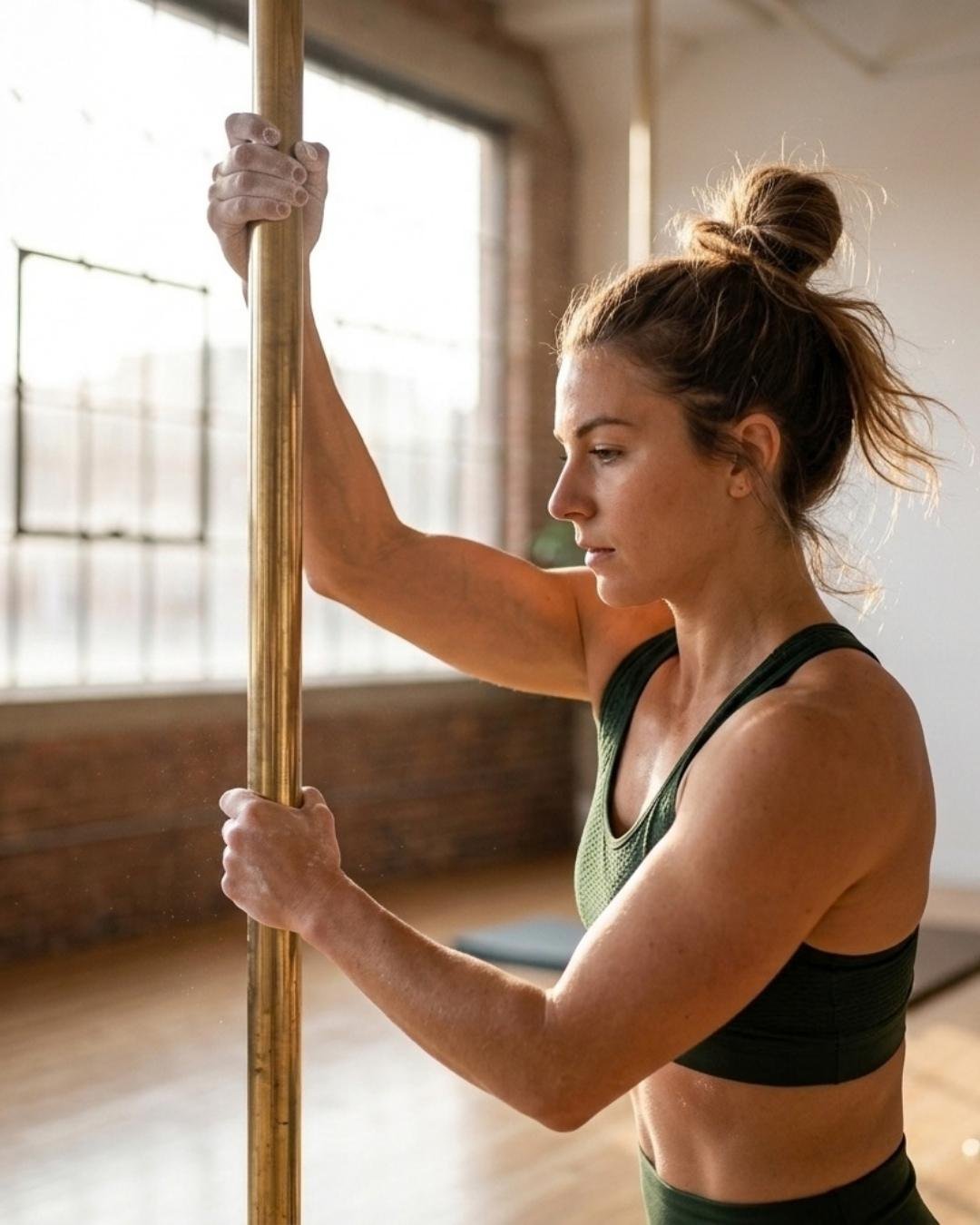
Themed classes and workshops
The searches are specific and discreet: “pole dance” plus the town, “pole dance for beginners”, “adult dance classes”.
Many give up for fear of being looked at, or of not being good enough. Saying plainly that complete beginners are welcome, with no fitness requirement, removes the first obstacle.
Spell out what to wear and what to bring. It is the question that comes up most often in private messages, and the easiest to settle in one sentence.
Prerequisites are not decoration. Some moves demand strength that has to be built up; letting anyone book an advanced class freely puts both the student and the studio at risk.
Professional liability insurance is essential, and the equipment has to be checked regularly.
Image rights. Class photos travel a long way in this discipline: explicit consent, collected at enrolment, keeps you out of trouble.
A prospective student arrives with three questions: when, at what level, how much. If the answer is not visible within a few seconds, they go back to scrolling a social feed and forget your studio. So put the week's schedule high up the page, with the teacher's name and the number of places still free. A useful website starts there, not with a photo carousel.
Beginners' pole, exotic, flow, flexibility, contemporary dance or adult ballet: every discipline deserves its own address. A schedule exported as a PDF is not read by search engines, and a studio that piles everything onto a single page loses every specific search. The writing involved is straightforward, and it is done once for the year.
Introduce the team, the space, the changing room, the number of poles and the way classes are put together. A clear pricing page saves you half your private messages, and a "your first session" page reassures those who have never set foot in a studio. If you take children and teenagers, say so explicitly: parents are looking for something different from adults. The content model is close to that of a dance school website, with vocabulary specific to pole.
The intent is local, almost always. People type the discipline followed by the name of the town, or "beginners pole class", "adult pole dance", "dance studio" in the evening after work. The variations are many but the logic is stable: a place, a time, a level. So your site has to name your neighbourhood, your real opening times and your levels in the text, not only in an image.
Many visitors will see nothing but your Google listing at first: opening times, photos of the studio, directions, reviews. Look after it as carefully as your home page, and point it at the page for the class in question rather than at the root of the site. A simple domain name, in .com or .fr, is easy to remember and easy to read out over the phone. To go further on visibility, read our guide to search optimisation for a sports business.
Write about what people actually ask you: where to start, how to protect your body, why technique comes before the trick, what choreography work brings. An article on a first time on stage or on the end-of-year show interests your students as much as Google. This content grows your audience without advertising, and it ages well. Studios that run several activities side by side often take their cue from a circus school website or a gymnastics club website.
Between a class page and a paid place, there should be a single action left. A booking system built into the site lets people book at midnight, when the urge strikes, and closes the slot as soon as it is full. Payment at booking through Stripe puts an end to last-minute no-shows and cash envelopes at reception. And the automatic reminders do the job nobody wants to do.
Memberships carry the season, but it is the themed workshops, the private lessons and the show rehearsals that create attachment. A private lesson sells very well online when the length, the price and the slot are visible without negotiation. Workshops deserve a page per edition, with the programme, the level required and a waiting list once the studio is full.
Think too about the formats that fall outside the grid: a parent-and-child workshop, preparation for a stage performance, a creative expression session, an introduction to modern dance for dancers from other disciplines. Each one is a page, so an extra way in. A connected schedule avoids double bookings between regular classes and these one-off events, and emails and campaigns let the students concerned know without you writing a single message by hand.
You are not starting from a generic template. BetterSport builds a bespoke website, designed and search-optimised for your activity, with the online schedule and sessions bookable around the clock. Booking handles limited places, the waiting list and automatic reminders; payment is taken at booking through Stripe; confirmations and follow-ups go out on their own. You also get bespoke software and an iOS and Android mobile app under your own brand, so your students carry your studio in their pocket.
The result is concrete: full sessions, sign-ups and payments with no chasing, and far less admin of your own on a Sunday evening. If you already have a site, a booking widget can be grafted onto it in the meantime. The rest gets decided by talking about your studio, your levels and your season: talk to an expert or start your free 14-day trial, with no card details.
Yes — capacity set class by class, with an automatic waiting list.
Yes, the prerequisites are shown and they control access to the slot.
Yes, with a visible balance and a deduction at each booking.
Yes, as part of the enrolment file, with explicit consent.
To teach a physical activity for payment, you need a recognised qualification or a professional licence that is currently valid. Professional liability insurance is essential too, and taking under-18s means a background check. Put this information on the site: it reassures students and parents alike.
Yes. Your domain is kept and pointed at the new site, so you do not lose the address people already know. Your photos of classes, of stage work and of shows are reused where the quality allows, after checking that you do have the consent of the people who appear in them.
That is the most common case. The site works on mobile, and you can go further with an iOS and Android app under your own brand. The student sees the schedule, books their place, pays and gets their reminder without opening a computer.
Yes, like any other slot. A workshop becomes a bookable page with its own capacity and waiting list; a private lesson is booked on a slot you open. The prices stay yours, and the money is taken through online payment at the moment of booking.