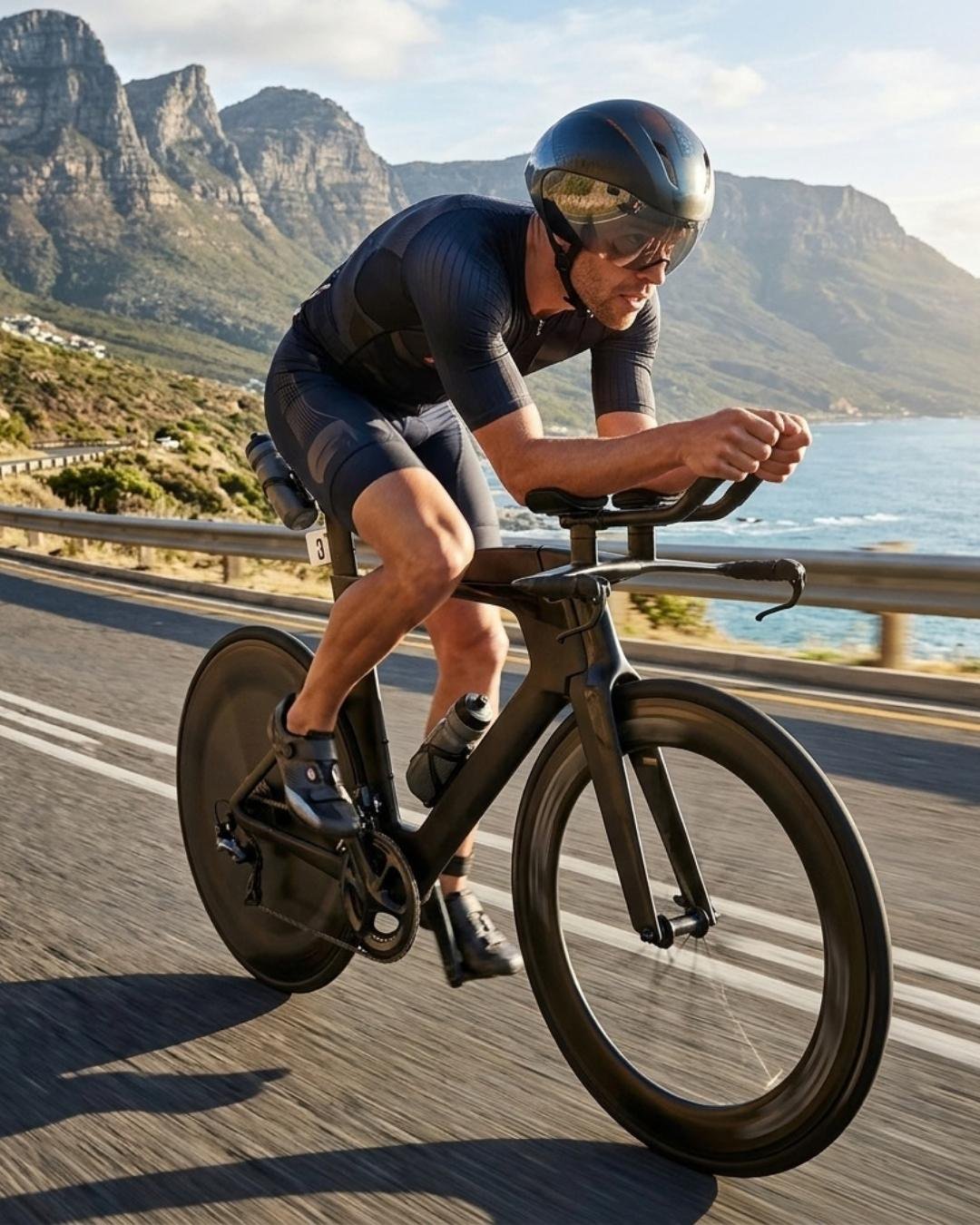
Zones built on a dated FTP
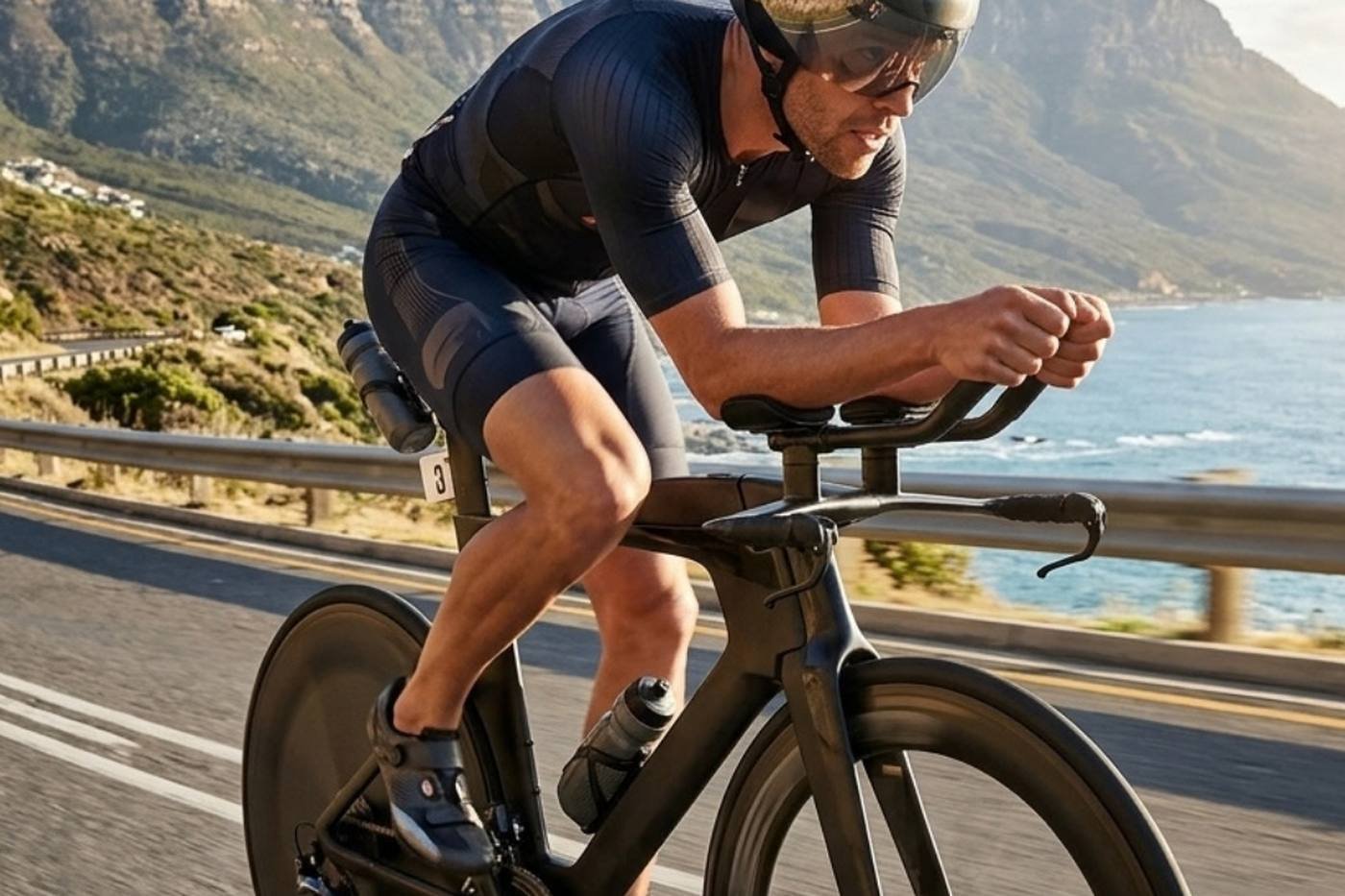
Cycling is trained on power, not on feel. Your plans read in zones and are checked against a data file — your page should say so.
A power meter, an FTP, a set of zones. The coach becomes an analyst more than a companion, and almost always works remotely.
The whole plan is expressed as a percentage of threshold power. When it is retested, the zones shift — and the sessions follow with no rewriting.
Duration, intervals, target power, cadence. The rider has it in front of them during the effort, which beats a vague recollection.
Two seasons, two weekly structures. The plan switches on a set date instead of being dictated by the weather week by week.
Étape du Tour, granfondo, club time trial: the plan is built backwards from the event, with its loading weeks and its taper.
Zones built on a dated FTP
A session that reads on the head unit

Winter on the trainer, summer outdoors

The goal: one sportive, one date
The searches are technical and committed: "cycling training plan", "cycling coach", "Étape du Tour preparation", "power-based training".
These riders already own a power meter and analysis software. They are not after a motivator but someone able to read their files and explain why a given week is lighter.
A page describing your method — polarised, pyramidal, block periodisation — speaks to this audience far better than a promised result.
The home trainer builds loyalty. Three months of short, precise indoor sessions create a habit and a relationship, at a time when most cyclists no longer ride.
The season is preparing against schedule. Your sales are made in November for objectives in July. Your page should be found in the fall, not the spring.
Road safety. Long exit alone, height difference, lighting: what you prescribe is binding. Planning an internal fallback plan is not easy, it is serious.
A cyclist who arrives on your site does not read: they scan. In a few seconds they look for who you are, what you sell, how long the coaching runs and how to sign up. Your site has to answer those four questions before the first scroll. And it has to do it just as well in its mobile version, since that is where most of the visits are decided.
A home page is never enough. Each offer deserves its own address, because a search engine indexes pages, not vague intentions. The visitor who lands straight on the package that concerns them hesitates half as much.
A stranger is about to hand you their winter. So show what proves you are serious: your qualification or your professional licence, your insurance, the framework you work within. If you coach under-18s, the background check is part of the job, and writing it down costs nothing. Mention the medical certificate too when your organisation or your federation requires one.
The searches say a lot. Some type "cycling coach", others "FTP plan", and many start by looking for a free tool. They try a generic app, follow it for three weeks, then come back to a human when the plan stops fitting their life. That is exactly the moment your page has to exist.
You coach online? The search stays geographical all the same. A rider often looks for someone in their own region, if only to ride together once and get a feel for it. Look after your business listing, your reviews, your opening hours, and point them at the right page rather than at the home page. Our pointers for being visible on Google set out that groundwork.
Search engines understand meaning, not just the shape of words. There is no point repeating the same expression twenty times: better to cover a subject fully, with real examples and numbers taken from your own sessions. A structured cycling workout, a long ride, a threshold block: use the terms your clients use among themselves.
If you also coach other audiences, give them their own page instead of mixing everything together. Running and triathlon bring different searches and different habits, and a website for a triathlon coach is not written like a cycling coach's.
Your clients arrive fully equipped. A bike computer on the bars, a watch on the wrist, sometimes an Apple Watch for the rest of the week. Between the device, the manufacturer's software and the sharing platform, the files already sync by themselves. Your site therefore has no reason to do that job again.
What these people type is very concrete: "send my workouts to garmin connect", "cycling plan on apple watch", "export data to strava". Your role begins after the sync, at the point of interpretation.
Consumer apps all announce the same thing: "analyse your data", "analyse your workouts", a badge as soon as the target is hit. You are selling something else. Write in black and white which formats you accept, how you go through completed rides and how quickly you come back to the rider. Also spell out what you need in order to use their files: a sensor, a shared account, a regular export.
Performance tracking touches closely on health. State what information you collect, why, and how long you keep it. Good privacy practice fits on one readable page, not in ten screens of terms and conditions. Finally, think about accessibility: sufficient contrast, text that can be enlarged, forms usable from the keyboard — that is experience gained for everyone too.
Between "this coach looks good" and "it is booked" there are often three days and two hesitations. Every unnecessary step costs a client. The aim is simple: make signing up possible on a Sunday evening, from a phone, without writing to you.
That mechanism is worth as much to a lone coach as to a club or a team. The riders signing up for the group ride, Tuesday evening's strength and conditioning, the spring camp: plenty of sports organisations work like this, with the same booking system in the background.
A sportive, a training camp, a come-and-try ride to get back on the bike after winter: these are your best chances to attract new contacts. Open the entries on a dedicated page, with a number of places and a closing date announced up front. After that, emails and campaigns handle the reminder to your list, particularly in autumn when summer plans are being made.
BetterSport is not a template to fill in. We design a bespoke site, built and search-optimised for your activity, then connect it to the software that handles your bookings, your payments and your messages. You keep one place up to date instead of three tools that do not talk to each other.
In practice: your real availability is on display at all times, payment happens at the moment of booking, confirmations and follow-ups go out on their own. Your clients, for their part, find their sessions in an iOS and Android mobile app under your brand, with your name and your colours. Less admin in the evening, and sessions that fill up while you are out riding.
We can tailor the features to the way you work: self-employed coach, club with several coaches, remote or in-person offer. You can look through the detail of the personal trainer software before making any decision, and the questions below answer the rest.
The simplest thing is still to see the result on your own case. Take a moment to talk to an expert, or dive in and start your free 14-day trial: the trial asks for no card details.
Yes, as a percentage of threshold power. When it changes, the sessions recalculate.
Yes, on heart rate and duration, but the precision drops: better to say so at the point of sale.
You set the date of the event, then the loading blocks and the taper fall into place backwards from it.
Yes, shorter and denser. It is a weekly structure of its own, not the outdoor one moved inside.
The timescale depends mostly on what you already have to hand: your offers written up, your photos, your background. The technical side moves quickly once those are gathered. It is in fact better to open with three solid pages than to wait for ten perfect ones.
For a business card, yes. For selling, it is harder: booking, payment and automatic follow-ups are almost always missing. You then spend your time going back and forth by message, and it is that time that costs the most.
Yes. Paid coaching requires a recognised qualification or a valid professional licence, and a background check applies as soon as you work with under-18s. Think about your insurance too. These details have every place on your site: they reassure as much as they inform.
The site is there to be found and to convince; the app is there for the day-to-day follow-up. The two are linked rather than in competition. With BetterSport, your clients book from the web and then find their sessions in an app under your brand, on iOS as well as Android.